
Make eating well easier when you have limited energy, capacity and time.
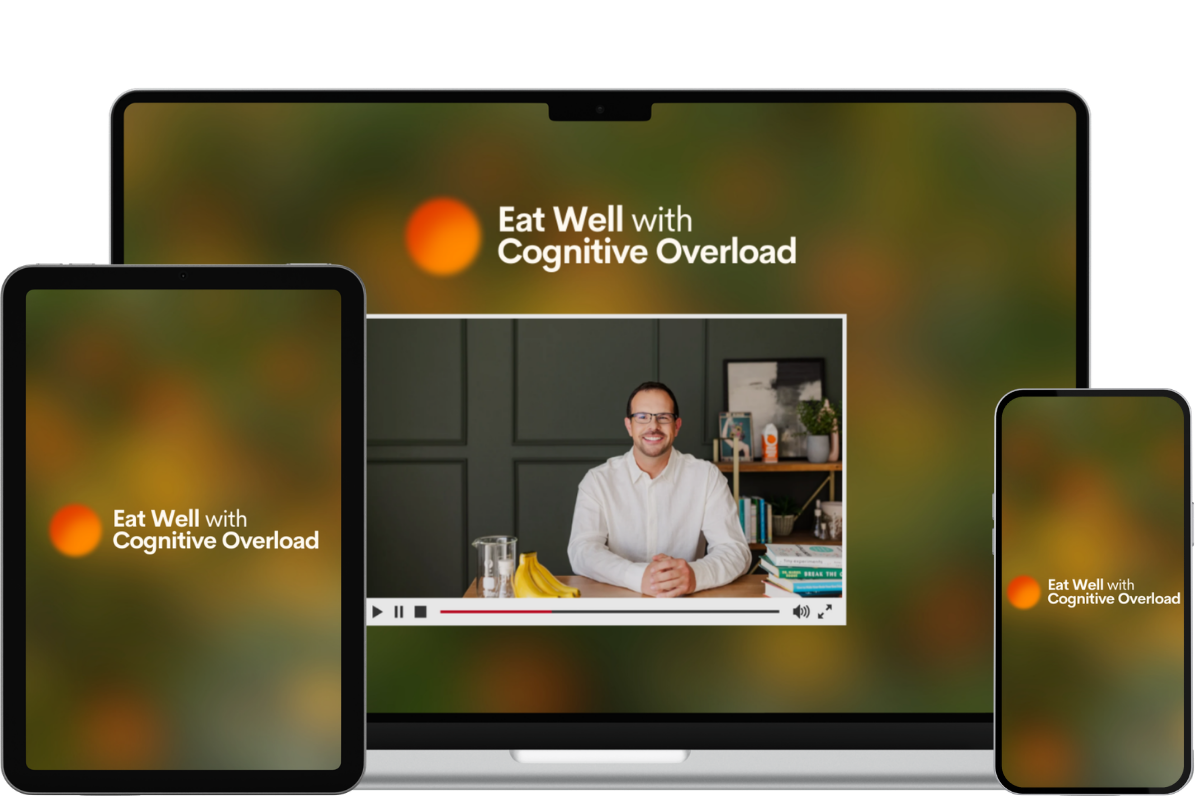
Eat Well with Cognitive Overload is a a realistic, compassionate and step-by-step course designed to help make eating well easier for people who have experienced trauma, have chronic health conditions and know what they’re “supposed to” eat but just can’t seem to do it.
Eating well sounds as simple as making different choices—but it’s not.
Our ability to feed ourselves and make decision about food relies on a set of mental processes called cognitive functions. These are the processes your brain uses to plan, organize, start tasks, stay focused, shift between steps, and follow through.
Cognitive functions help you turn intention into action—especially for things that require multiple steps, like planning, preparing, and organizing meals, and cooking.
They aren’t personality traits: they’re brain-based systems. And when those systems are overloaded or fatigued, thinking about food, preparing a meal and eating can start to feel exhausting and overwhelming.
The parts of your brain that regulate your cognitive functions are highly sensitive to stress.
Stress can cause cognitive overload. It can happen when your brain is under ongoing pressure from things like:
Chronic stress from work, money and caregiving
Numerous mental health, digestive, neurological, and autoimmune conditions
Mental overload from constant decision-making
Traumatic experiences and adversity
When your cognitive functioning systems are overload, your brain naturally starts to prioritize short-term, low-effort rewards—and this makes it difficult to complete complex tasks that require more effort—like planning, organizing, and preparing meals.
This program shows you why that happens, and gives you tools to work with the brain you actually have—not the one you wish you had.
Cognitive overload can look like:
You skip meals and don’t realize it until it’s too late and you’re feeling hangry
You often feel overwhelmed by cooking or prepping meals
You overthink each meal, then end up eating nothing or food that doesn’t make you feel good
You make diet and meal plans but never follow them
You know which foods help you feel better, but you can’t seem to follow through with actually preparing them
You keep telling yourself you’ll “do better” tomorrow
You feel like eating is just one more thing your brain can’t manage
You keep blaming yourself but don’t know what else to do
Why cognitive overload affects how you eat (and why it’s not your fault)
Which cognitive functions are tied to which nutritional behaviors
How to identify what’s actually disrupting your ability to eat, in real time
How to notice patterns without shame, so you can see what’s happening before you spiral
Simple ways to reduce the cognitive demands from food so eating becomes easier, even when everything about it seems hard
Inside Eating Well with Cognitive Overload, you’ll learn:
WHAT YOU’LL RECEIVE

7 short, engaging and easy-to-digest video lessons (under 10 minutes each) that you can actually finish.

An interactive Food–Function Tracker to help you spot patterns and avoid roadblocks before you encounter them.
Micro-strategies for shopping, planning, prepping, and cooking with limited energy, time and capacity.

Executive dysfunction friendly system builder worksheets to create routines that work with your brain

20 Interruption Scripts to help you respond to self-blame and stop shaming yourself in the moment.

Lifetime access to the entire program. Go at your pace and return when you need. No pressure.
-
Nope. This isn’t a plan or a diet—it’s a way to understand how your brain works so you can build your own systems that work with it instead of against it.
-
That’s to be expected!
The pace of this program can shift based on your capacity, energy, and life demands.
Time for processing, adjustment, and rest are part of the process—not signs of failure.
You don’t need to be at your best to benefit from this program; you just need to be able to show up as you are, right here, and right now.
You can adjust the pace based on your bandwidth.
-
Yes. This program does not focus on weight loss or use weight as a proxy for health.
-
Perfect. This program isn’t about what to eat. It’s about why doing it feels so hard and how to make it easier.
-
While you don’t need a specific diagnosis to benefit from this program, those who benefit the most will likely have been diagnosed with some combination of the following: ADHD, CPTSD/PTSD, depression, anxiety, autism, OCD, and/or a chronic autoimmune, neurological, digestive, or cardiometabolic condition.
It is important that you have the care that you need.
This program is not a substitute for medical care, therapy, or nutrition counseling, and does not involve the diagnosis of any illness or condition. You should always consult with a qualified meidcal professional before beginning.
-
Only if you need them.
-
That’s fine. Some people have a variety of sensory challenges with food, aversions, “limited palate,” and allergies. Everything in this program is considerate of your unique circumstances.
-
Once you reserve your spot by processing your payment, you’ll receive full access to the program on March 16, 2026.
-
You can email care@timfrie.com.
Honest Answers
Reserve Your Access Now
Get lifetime access to the Eat Well with Cognitive Overload course and the Spoonless Eating System for just $49. No monthly payments, on-going subscriptions, or hidden fees.